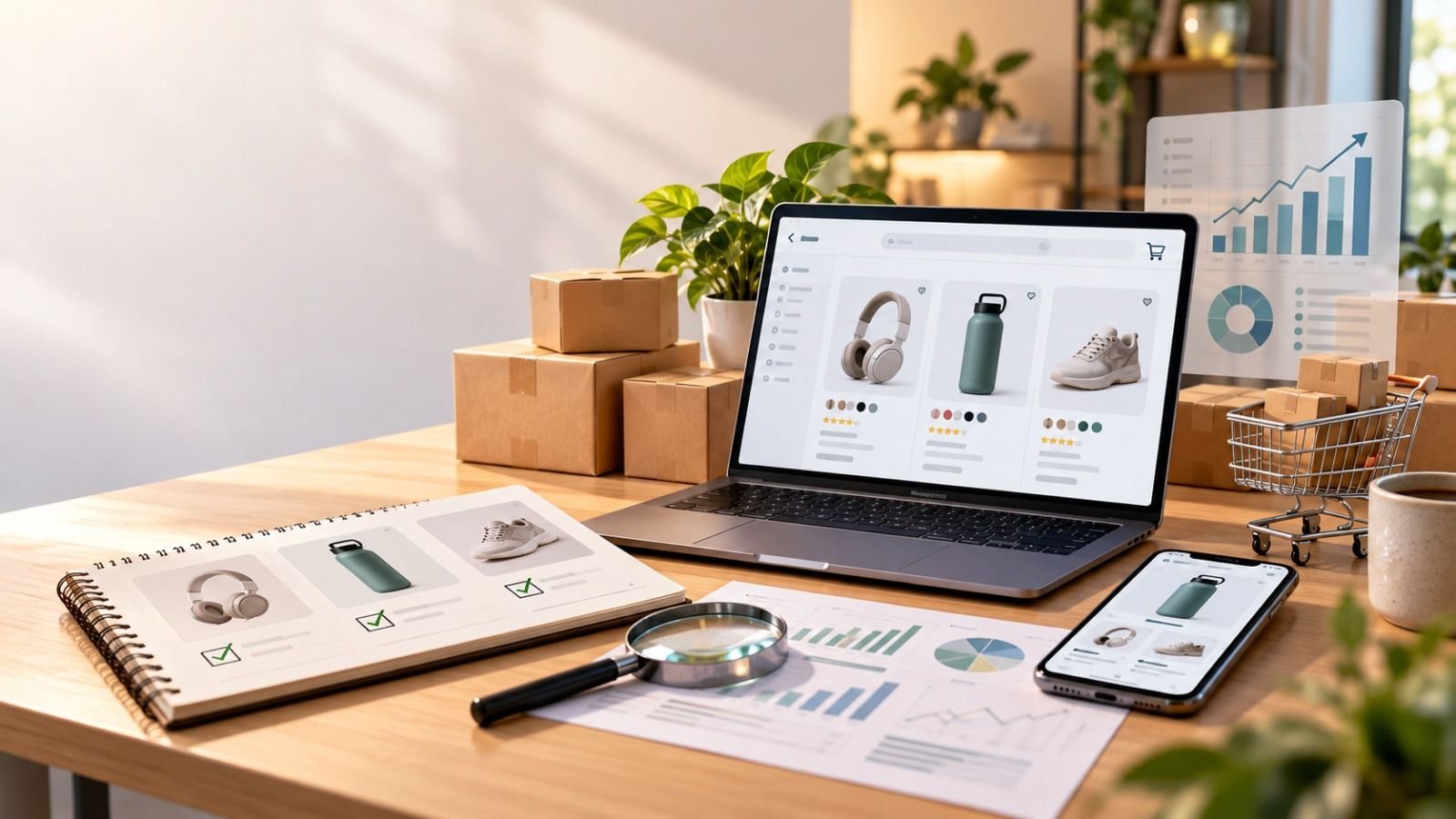
How to Choose a Product for a Small E-commerce Business
If you are planning to launch an e-commerce business and don’t have your own product idea, thousands of products are suitable for online selling. However, there are a few things you need to consider because not every best-selling product is suitable for e-commerce, and not every popular product will be a good fit for your store.
1. Know Your Budget
When launching a new store, budget is a primary concern for every business owner. Sometimes, we miscalculate our budget, and this mistake leaves us stuck in the middle of a project. So, let’s look at the main areas where you need to spend money:
a. Product Cost
b. Shipping Cost
c. Packaging Cost
d. Digital Infrastructure Development Cost
e. Ongoing Marketing Cost
These are the main areas where you will spend money, and you cannot skip any of them. However, you can reduce costs with expert guidance and consultancy, which are available at A-Tech IT Solutions.
At A-Tech, we help people launch their startups within their budgets by reducing expenses in areas where cost-cutting has the least impact. For example, we help optimize inventory management, packaging options, digital infrastructure, and marketing strategies to achieve the best possible results with minimal spending.
With the right planning and cost management, you can start your e-commerce journey in Pakistan with as little as $100.
2. Know Your Product
Now that you know your budget and spending limits, it’s time to learn about your product.
This doesn’t mean you need to know how to manufacture the product or become an expert at using it. For example, if you want to sell engines, you don’t need to learn how to manufacture them or become an expert driver. What you need is accurate, in-depth knowledge of the product, including its pros and cons.
By understanding these advantages and disadvantages, you can identify your target audience. You might think that all you need to do is identify its USPs (Unique Selling Points), but in reality, you need to determine which features and benefits will make your product stand out and build a brand story around them.
Remember, you are not manufacturing the product; you are buying it from the market. Therefore, you need to develop your USPs, brand story, and target audience around the product you choose.
If researching and learning about a product doesn’t interest you, it may be a sign that you should consider a different product.
3. Check Practicality
As mentioned earlier, not every good product is the right product for your business. You also need to consider the following factors, which are briefly explained in this article.
a. Not Too Heavy
Your product should be easy to transport so that you can use commonly available shipping services to deliver it to customers across your target market.
For example, as a small e-commerce business, you should avoid selling wooden beds because they require specialized shipping arrangements that may not be available through standard cash-on-delivery (COD) services.
b. Not Too Cheap
You should avoid products that are so inexpensive and widely available that customers can easily buy them from their local shops.
For example, a simple comb is so cheap that its delivery cost may exceed its selling price. Many customers would not be willing to pay more for delivery than for the product itself. However, a premium or luxury comb could be a better option.
c. Not Too Complicated
Your product should not require lengthy explanations or complicated assembly. Products that are difficult to understand, install, or use can be challenging to sell through a small e-commerce store.
d. Avoid Products That Require Physical Inspection
Some products need to be physically examined to assess their appearance, feel, or performance before purchase. For example, customers may prefer to inspect a car in person before buying it.
Such products can be more difficult to sell online, especially for a small business.
e. Choose Products With Consistent Demand and a Large Audience
Choose products that people commonly use and that have an established demand. This will make it easier to identify and reach your target audience.
f. Minimize Product Variations
More product variations mean more inventory requirements and higher stock management costs.
For example, if you sell men’s shoes in 10 styles, with five colours per style and seven to ten sizes per colour, you will need a significant investment in inventory.
As a small e-commerce business, managing so many variations can be difficult. Starting with fewer variations can help you control costs and simplify inventory management.
4. Analyze Your Competitors
Once you have decided what you want to sell, it’s time to study your competitors. Look at the leading businesses in your market and learn how they built their brands, developed their USPs, and positioned their products.
There are two common ways to compete: offer a lower price while maintaining comparable product quality, or maintain a competitive price while offering better quality.
This approach may result in slower growth at first, but with the right strategy, it can help you build a stronger market position and achieve long-term stability.
5. Identify Your Unique Selling Points (USPs)
Why should a customer trust you and pay for a product from an unfamiliar brand when they have other options available?
After analyzing the market and your competitors’ USPs, you should have a clearer understanding of your target audience. You should also have decided whether you want to offer better quality at a similar price or comparable quality at a lower price.
Now, ask yourself: Why should customers choose your product over others?
The answer will help you define your product’s unique selling points. You can then build a compelling brand story that encourages customers who have never heard of your business to trust your brand.
Remember, you are new to the market, so your brand story must be authentic. A fabricated story can damage your credibility and cause customers to lose trust in your brand.
Final Thoughts
Now that you have selected your product and developed your brand story and USPs, you are ready to prepare for launch.
You can manage your digital media activities yourself during the testing phase. However, if you want to expand your business and grow faster, consider hiring an agency or building an in-house team.
If you need guidance, you can contact A-Tech IT Solutions for digital media services, IT solutions, and business consultancy.
You can also read our detailed guide on hiring an agency in this article.
Author:
Ali Ahmad
Founder of A Tech IT Solutions
